
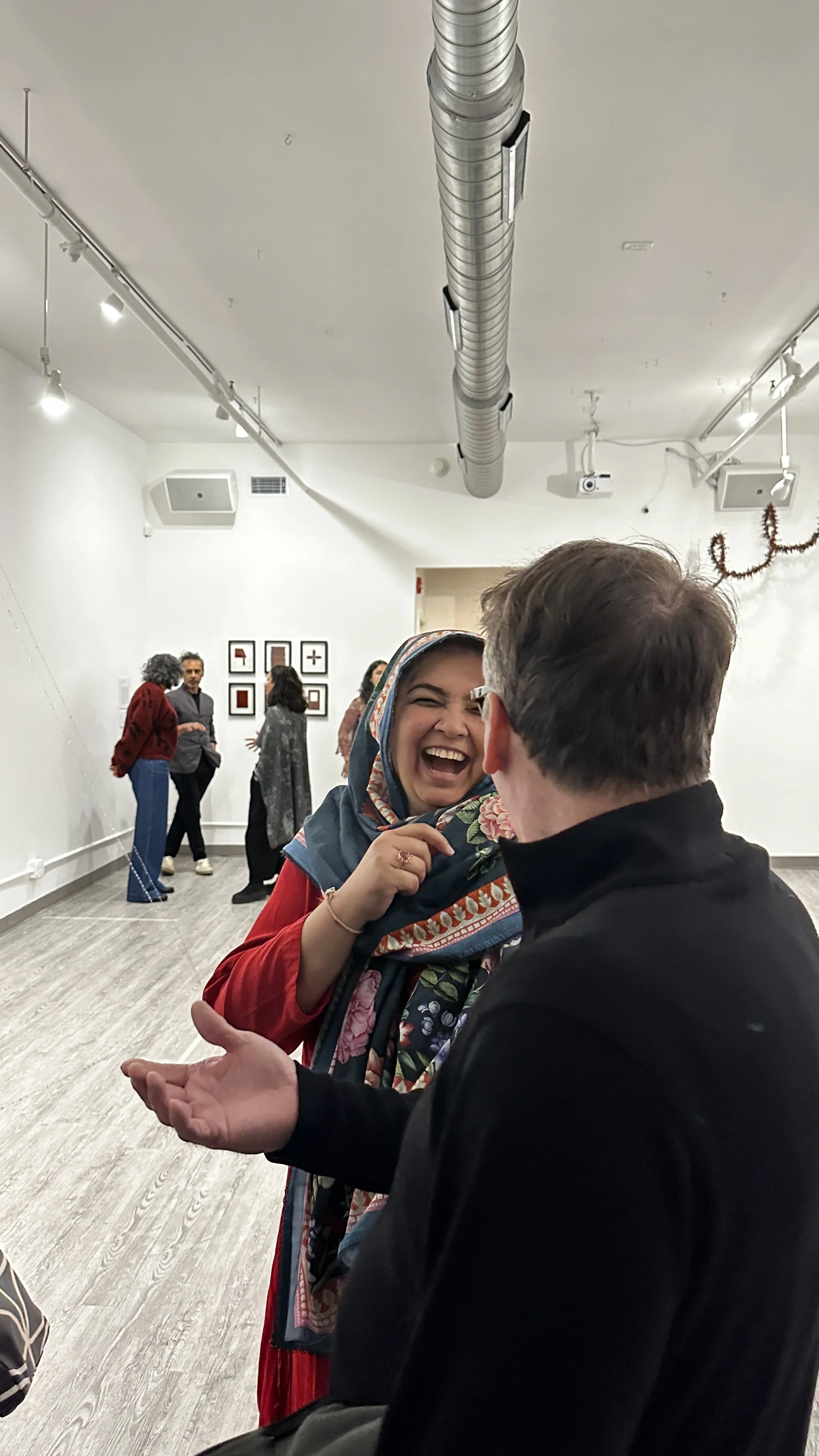
Twelve Gates Arts is honored to present Karen Dias: A Dotted Line, curated by Murtaza Vali. This show will be on view from January 16th through February 24th, 2026. The opening reception will be on January 16th, 6:30-8:30PM featuring a conversation with the artist and curator.
Karen Dias: A Dotted Line brings together sculptural installations and wall-based works by Dias produced over the past five years that explore different facets of the line, not only as a tool for delineating form and articulating space but also for structuring and organizing society and, in the guise of the border, as a political and ideological instrument that is used to demarcate territory, determine belonging, and define the conditions of inclusion/exclusion.
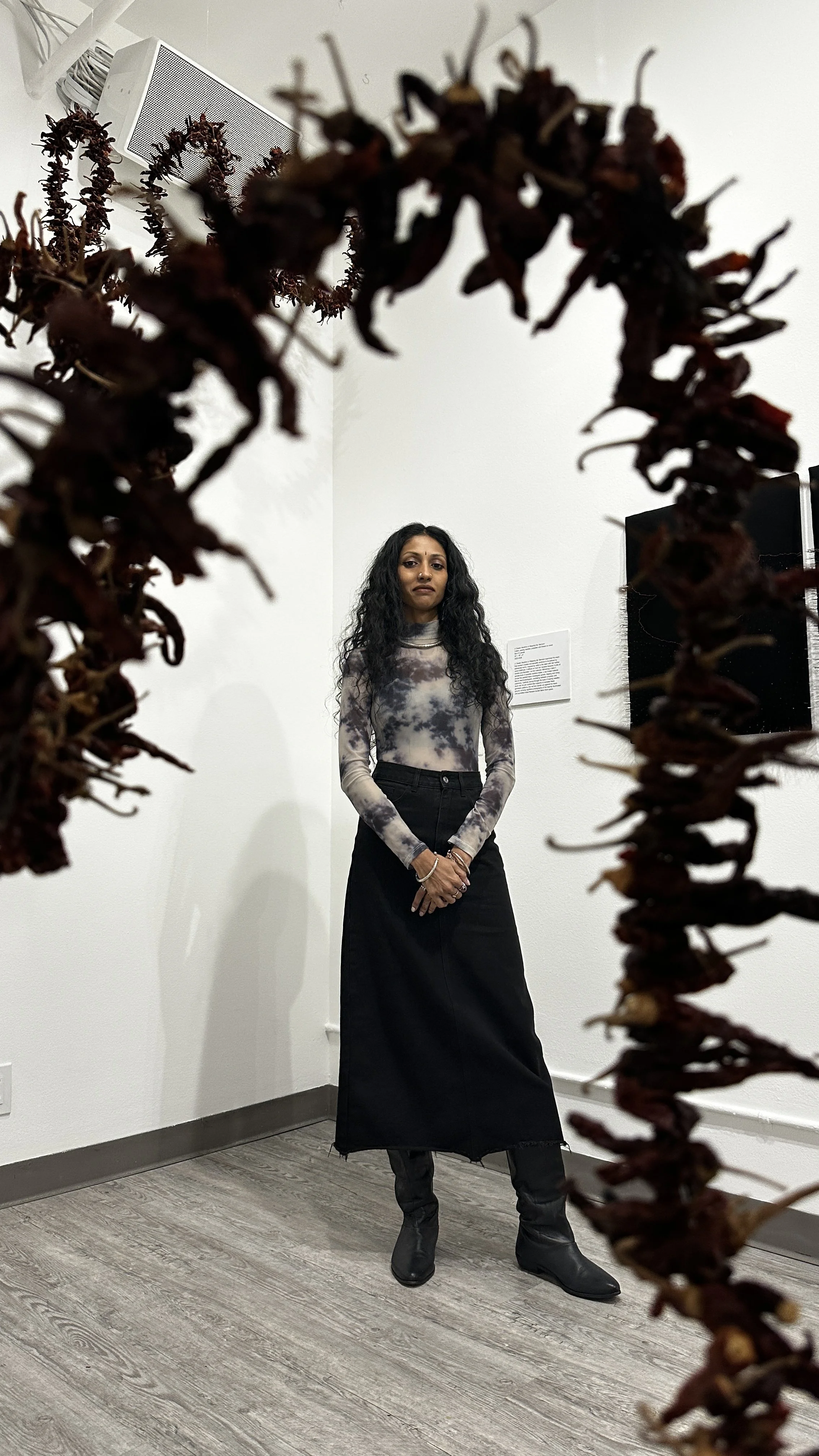
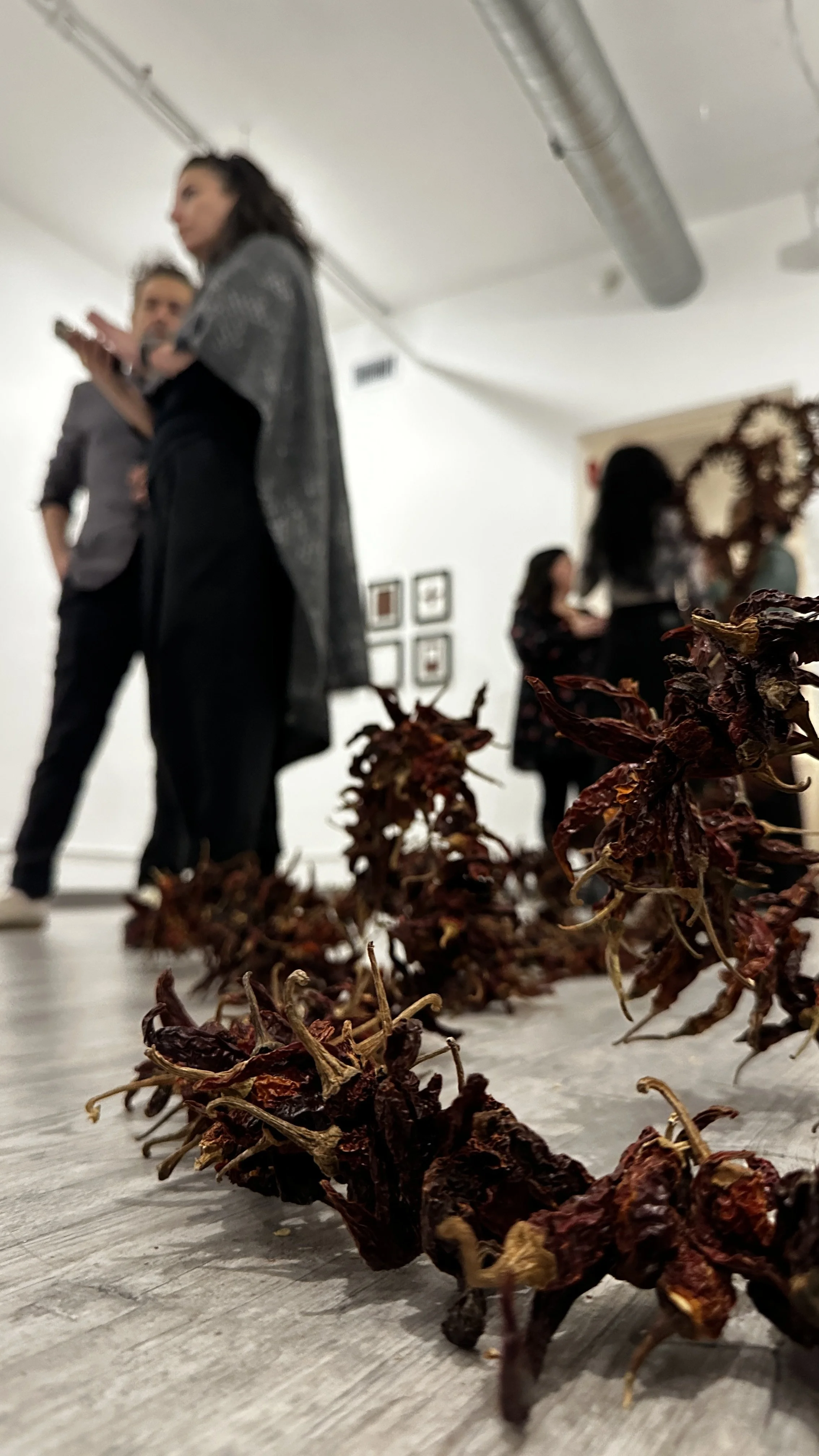
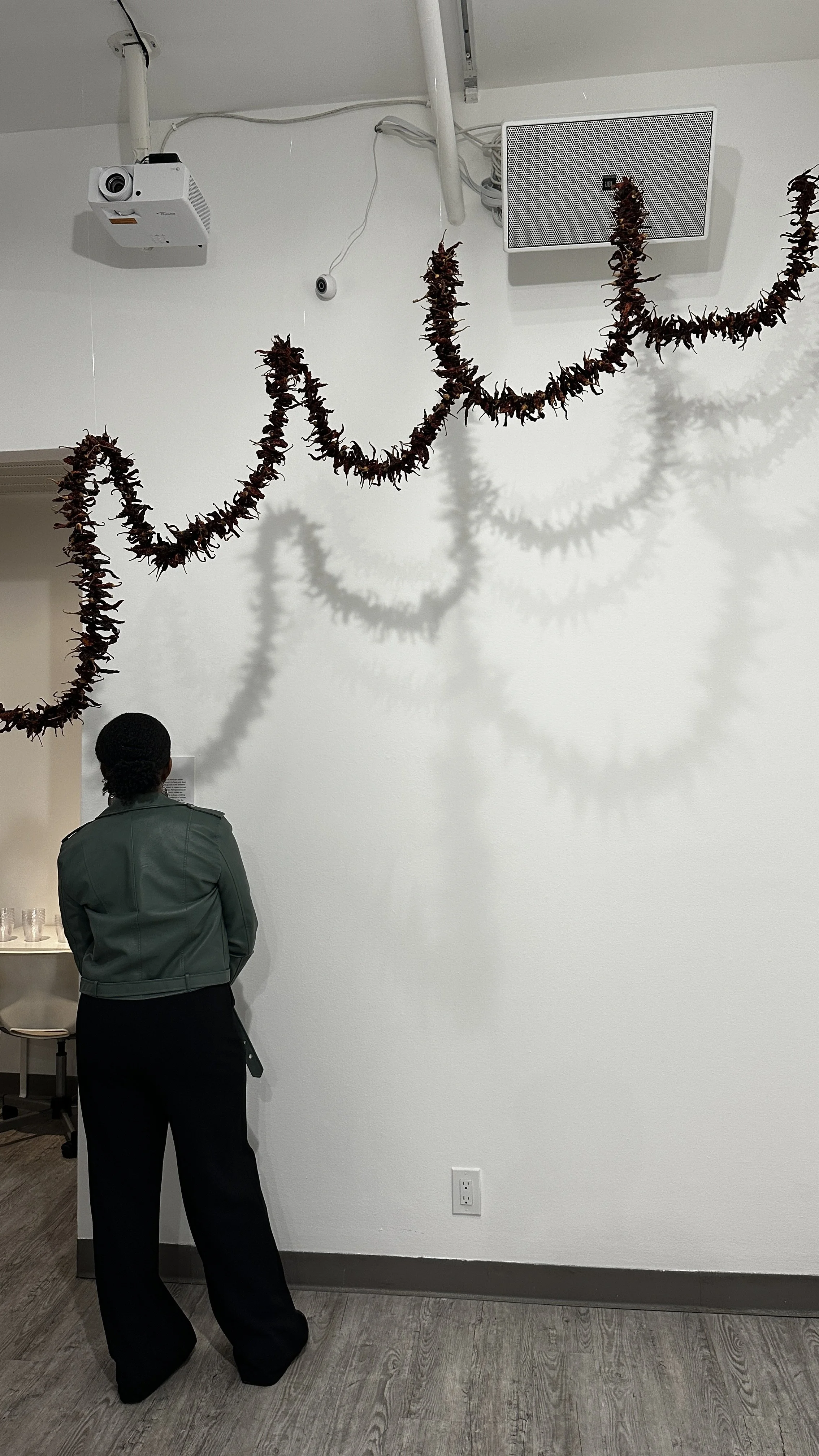
An accomplished photojournalist turned artist, Dias demonstrates a keen sensitivity to unconventional materials and the histories and memories they hold and carry. Anchoring the exhibition are three site-specific installations, minimal line drawings in space composed of dried red chilies, razors, and safety pins, everyday objects that resonate socially, culturally, and symbolically with people across South Asia. Dias specifically chose these familiar materials for their dual nature, the way they index protection, care, and repair but also retain the capacity to cause pain or discomfort, to burn, cut, prick.
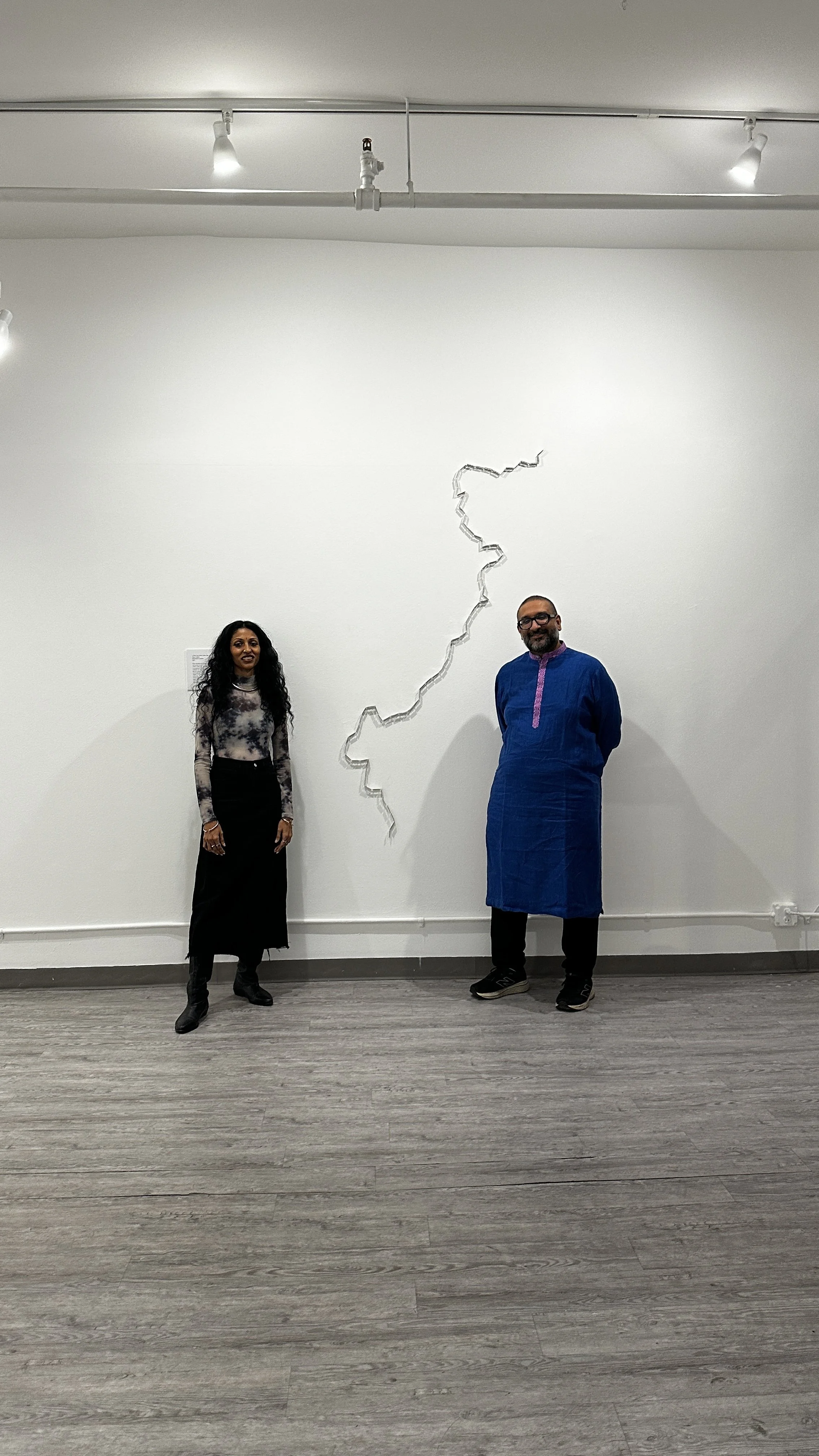
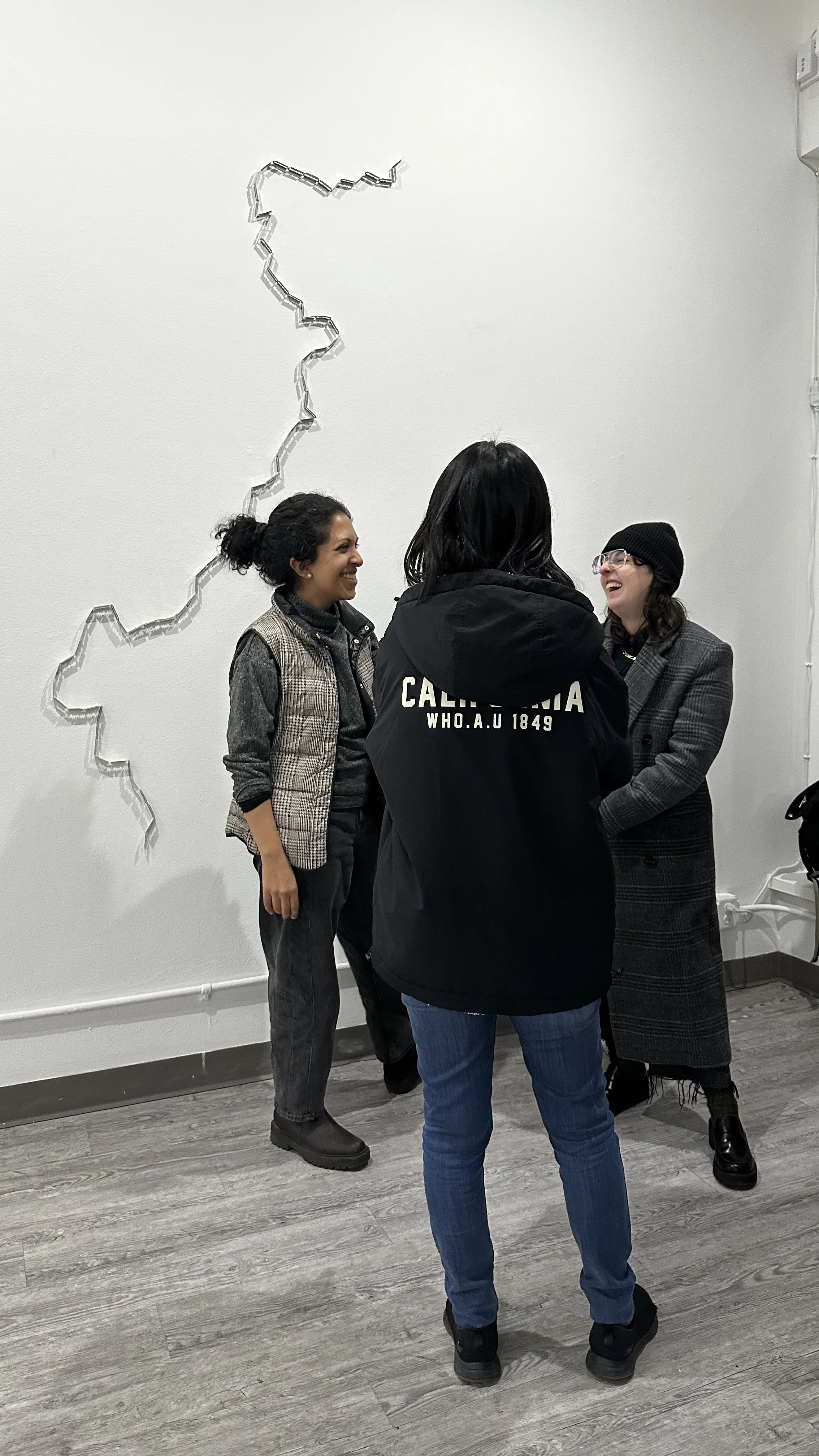
In one of these site-specific installations, Dias recreates the familiar contours of the India-Pakistan border using store bought double-sided razor blades. A Red Line Under a Blue Sky (2021). intimates the horrific violence that accompanied the foundation of these nation-states; she carefully embeds one edge of each razor into the gallery wall by cutting into its surface. Though abstracted, this gesture echoes the hasty and ill-advised inscription of a border by the existing colonial regime, a violent bisection of land, history, culture, community,and family. The other edge points out threateningly at the viewer, indexing how the trauma of that partition continues to haunt the region, resurfacing through history as cycles of communal violence and more recently taking hold in the guise of pervasive religious fundamentalism and an attendant politics of hate.
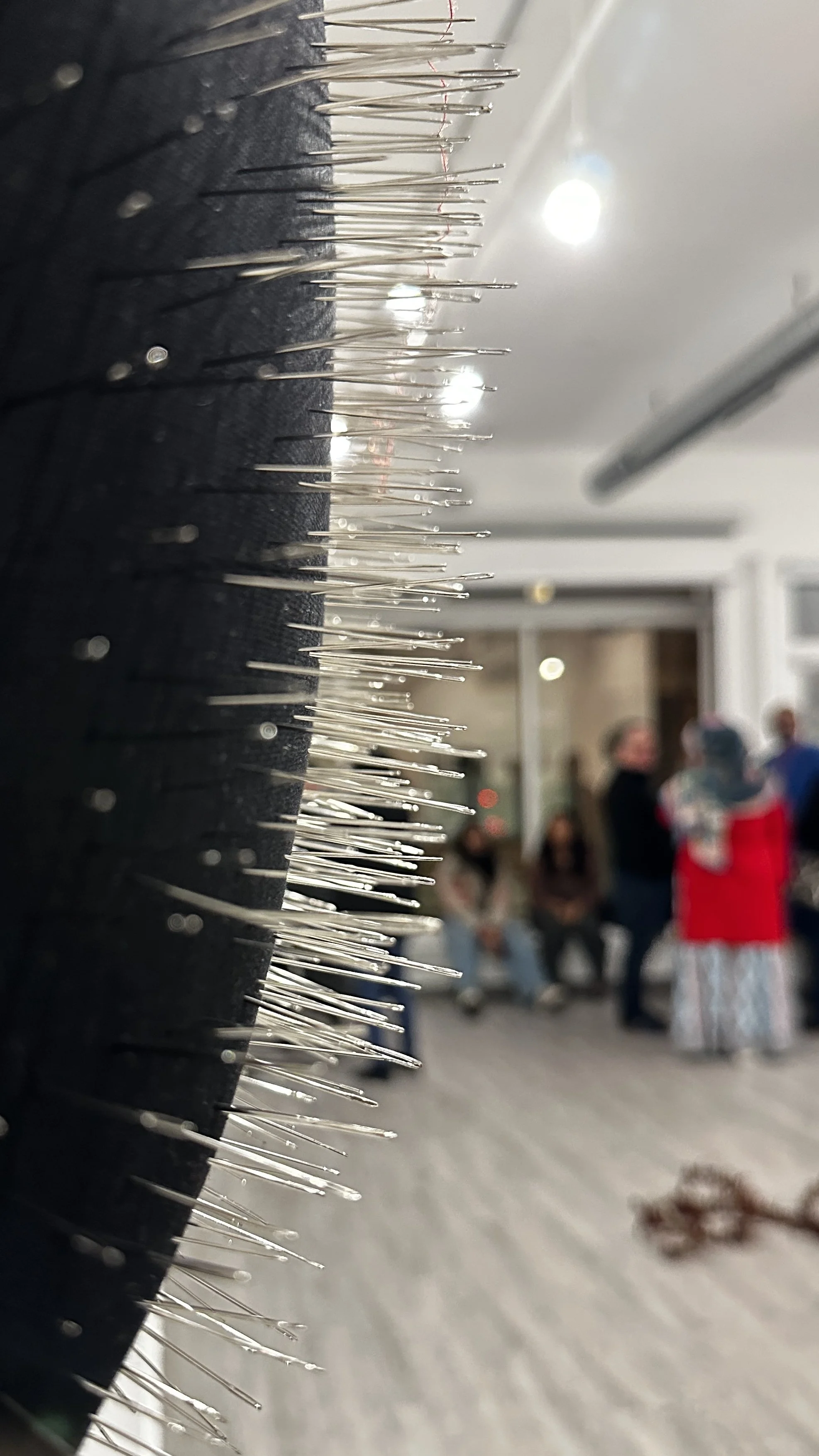
Dias extends the motif of the line to her own gendered body in A Classic Neckline or Mapping My Sternum (2025), a work that reflects on the way that women’s bodies and sexuality continue to be policed by patriarchal norms. Inspired by visits to the tailor with her mother since childhood, it reflects on how her neckline became “a site of tension and liberation” as she matured. Mimicking a tailor’s sample book of possible neckline styles, a red thread extends across five padded black rectangular panels, dipping and rising like an electrocardiogram, oscillating between propriety and autonomy. Carefully strung through the eyes of sewing needles stuck into the pin cushion-like supports to recreate these geometric patterns, the red line stands out against the black ground echoing nighttime photographs of the heavily illuminated and surveilled India-Pakistan border taken from space.
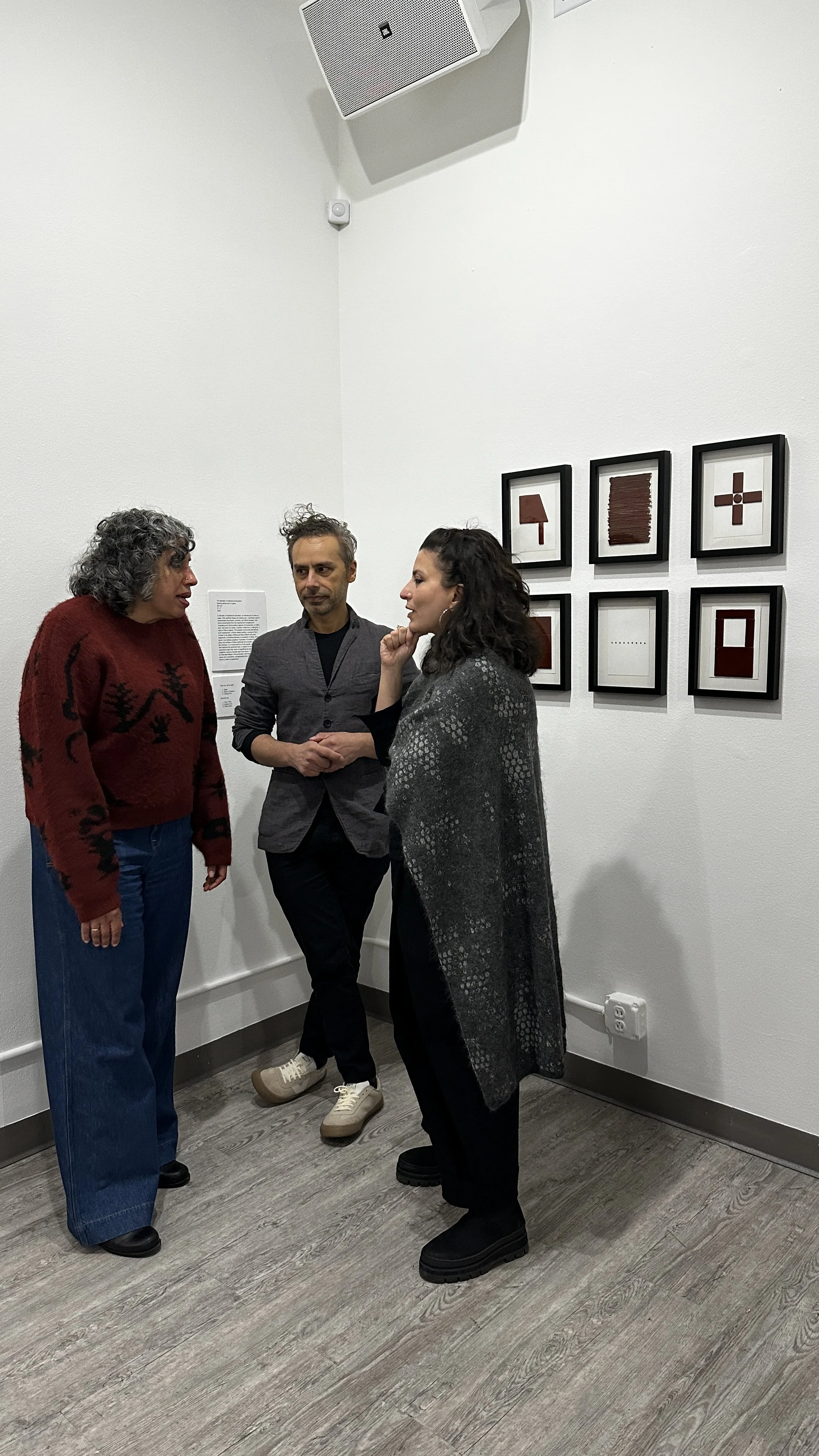
Banality of Institutional Disorders (2025) is a meditation on the dehumanizing drudgery of bureaucratic processes, a kind of slow violence enacted by the nation-state on its less enfranchised citizens. In these intimate works on paper, Dias skillfully shapes red sealing wax—commonly used to authenticate documents, contracts, and official decrees—into forms remembered from her experiences navigating the frustrating and mind-numbing vagaries of bureaucracy: an office door, the corner of a table, a section of tiled floor, a ceiling fan, a stack of files or papers. The boredom and anxiety that defines such experiences—of time wasted waiting in queues or for a number to be called, of filling and filing endless forms and paperwork, of shuttling between a succession of clerks, of being stuck in an endless purgatory of process—is worked into the tacky red surfaces of these restrained yet evocative compositions. But perhaps, it is a horizontal line of nine equally spaced red dots that captures this sentiment best. A marker for where one is expected to sign their name on legal/financial paperwork, it also suggests a queue of people seen from above. This dotted line is an extended ellipsis—the punctuation mark that suggests both pause and uncertainty—encapsulating how it feels to be forced to exist in a state of suspension.
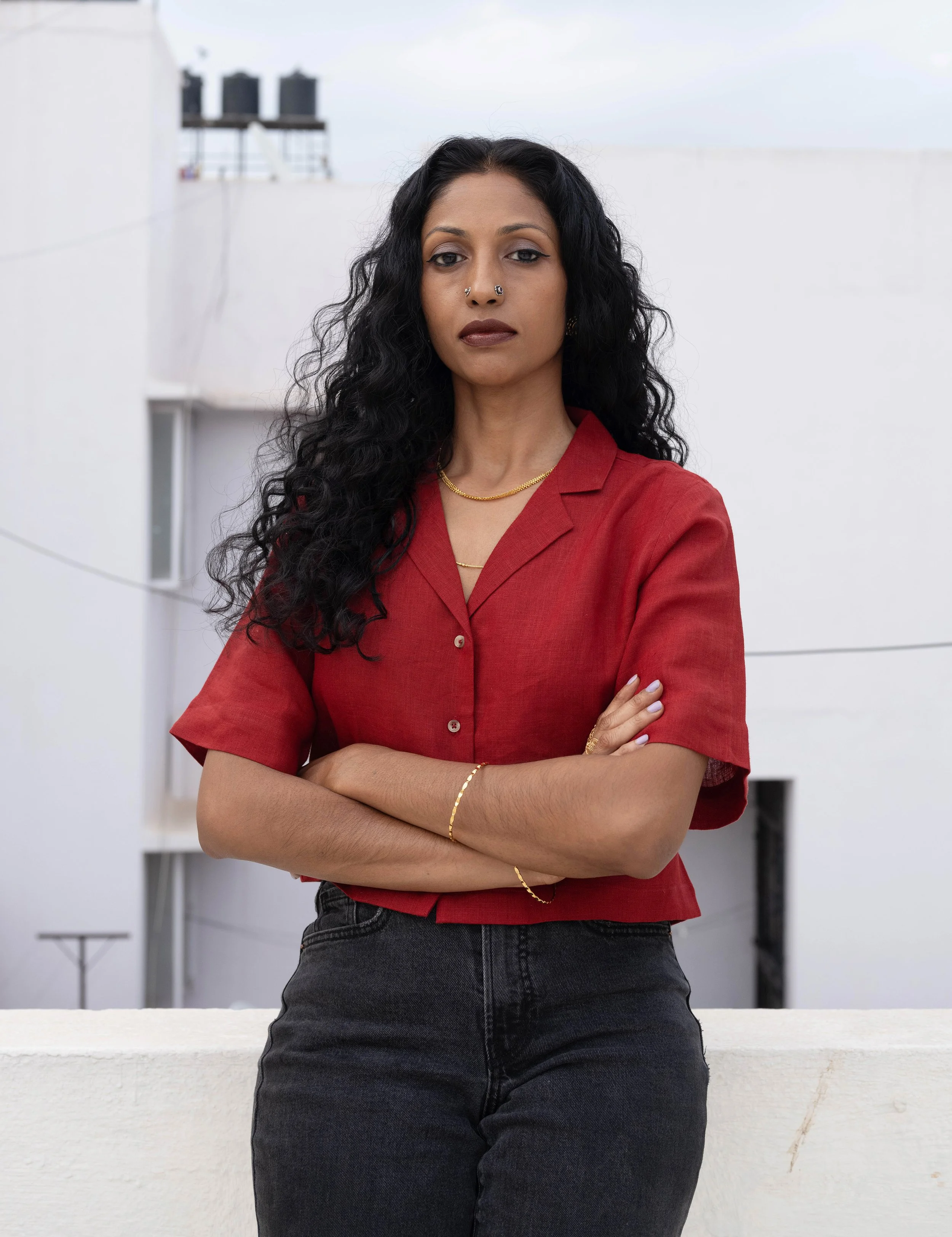
Karen Dias is an interdisciplinary artist and photographer working across mediums and materials. Her practice explores systems and representations of violence, power and pain. Karen has been an artist-in-residence at MASS MoCA (2022) and Woodward Residency in New York (2023). She was a participant in the Interdisciplinary Art & Theory Program (2024-25). Her work has been exhibited at Chennai Photo Biennale (2016), Serendipity Arts Festival (2017) and Kochi-Muziris Biennale (2025-26), India, Gulf Photo Plus, UAE (2017) and Tisseurs d’Images Festival, France (2018). Karen’s photographs have been published in The Washington Post, Al Jazeera, The New York Times, Le Monde, The Guardian, Bloomberg News, Monocle, Financial Times and Quanta among others. She has been a grant recipient of The International Women’s Media Foundation and Economic Hardship Reporting Project. She has served as faculty at the International Center of Photography and NYU. Karen currently teaches at the Fashion Institute of Technology and Columbia University. She grew up in Mumbai, belongs to Goa and lives in New York City.
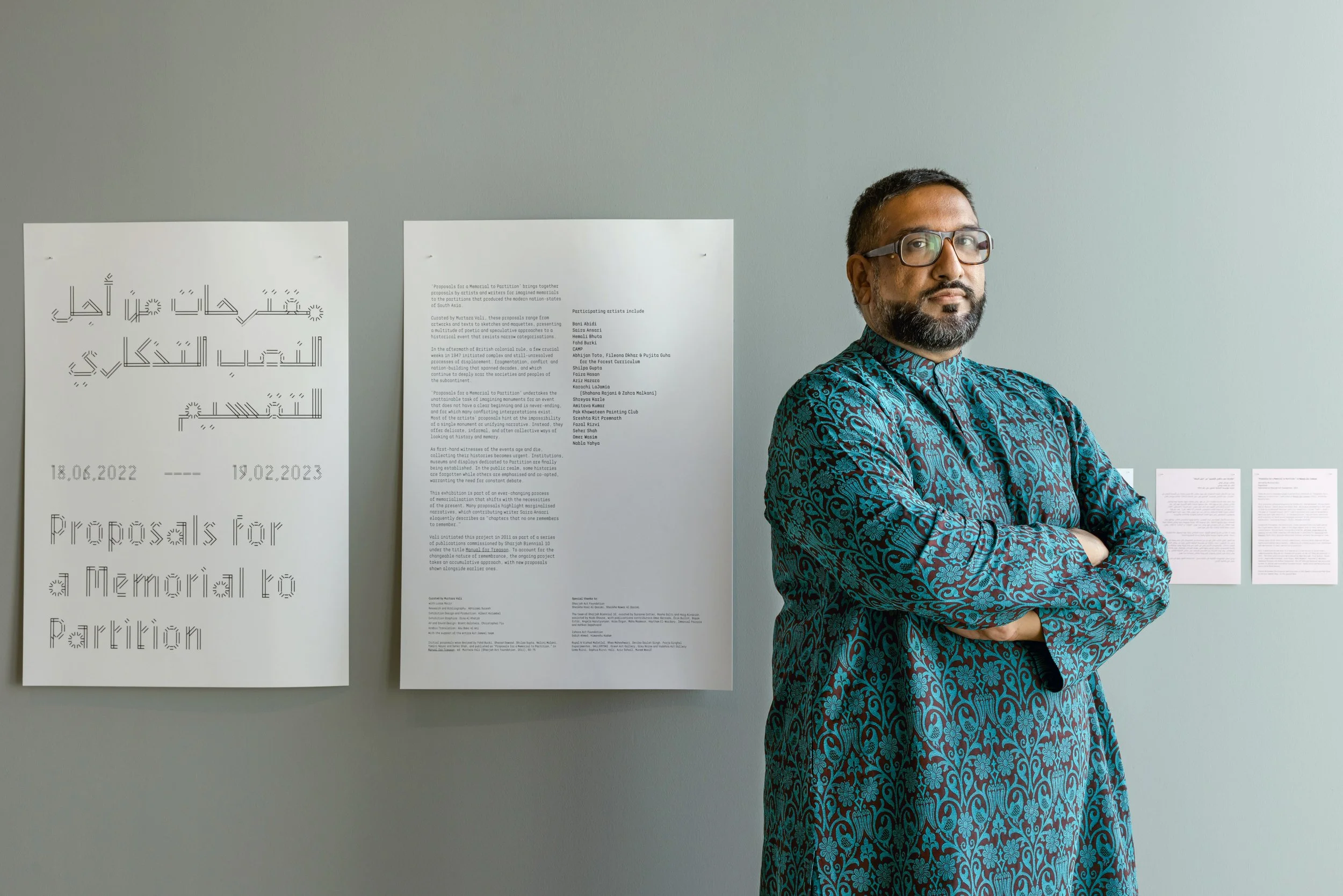
Murtaza Vali is a critic, curator, and art historian based in Brooklyn and Sharjah. A recipient of a 2011 Creative Capital | Warhol Foundation Arts Writers Grant for Short-Form Writing, he publishes regularly in art periodicals and exhibition catalogues for non-profit institutions and commercial galleries. Vali is an Adjunct Curator at the Jameel Arts Centre in Dubai, where he organized the widely-acclaimed group exhibitions Crude (2018-19), which explored the relationship between oil and modernity across West Asia and North Africa, and Guest Relations (with Lucas Morin) (2023-24), a sequel exhibition examining hotels and the hospitality industry across the Global South. He is also the curator of Proposals for a Memorial to Partition, an itinerant research and curatorial platform investigating the lingering trauma and legacy of partitions in South Asia and beyond. First appearing in Manual for Treason, a publication commissioned for Sharjah Biennial 10 (2011), subsequent iterations of this project have been presented at the Jameel Arts Centre (2022-23) and Twelve Gates Arts, Philadelphia (2023). Other notable recent projects include SUN™, one chapter of Abu Dhabi non-profit 421 Art Campus’ ten-year anniversary exhibition Rays, Ripples, Residue (2025-26), and പൊന്നുപോലെ/Like Gold, a collateral exhibition of the 6th Kochi-Muziris Biennale, in collaboration with Rizq Art Initiative, Abu Dhabi (2025-26).
This exhibition will be on view from January 16 to February 24. The opening reception will be on January 16 from 6:30 to 8:30 PM.